
Choosing the right IBM Engineering Lifecycle Management (ELM) partner is important for Swedish engineering companies seeking to improve requirements management, development workflows, testing, and traceability. The right partner can help connect engineering tools, reduce manual work, and improve visibility across the product development lifecycle.
Before selecting a partner, evaluate its technical expertise, integration capabilities, industry knowledge, migration experience, and long-term support. These ten factors will help you make an informed decision.
1. Evaluate IBM ELM Implementation Experience
IBM ELM supports requirements management, systems engineering, development workflows, and test management. Your implementation partner should understand how these capabilities work together to support your engineering processes.
Evaluate experience with IBM Engineering Requirements Management DOORS Next, IBM Engineering Workflow Management (EWM), IBM Engineering Test Management (ETM), and IBM Rhapsody where relevant.
Ask potential partners about previous implementations, technical challenges, and experience with complex engineering environments. A partner should be able to explain how the proposed solution will address your specific challenges rather than simply describe product features.
For Swedish automotive, industrial, and embedded software companies, experience with multidisciplinary engineering workflows is particularly valuable. Integrating requirements, development and testing with IBM ELM can help organizations establish stronger connections between engineering activities.
Explore IBM ELM consulting and implementation services in Sweden to understand how an implementation can be aligned with your existing engineering environment.
2. Check Requirements Management and Traceability Expertise
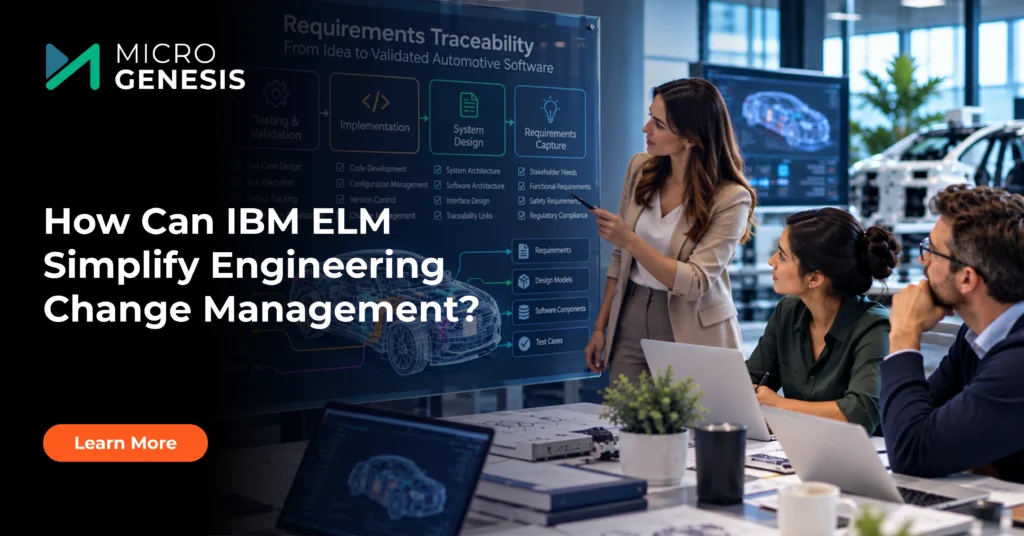
Requirements traceability helps engineering teams understand how product requirements connect to system design, development, and testing activities.
A capable partner should be able to configure requirements structures, attributes, reviews, relationships, and change management workflows according to your organization’s needs.
For example, when an automotive software requirement changes, engineers should be able to identify the associated design elements, development tasks, and verification activities. Without traceability, teams may need to search multiple systems manually, increasing the risk of missed dependencies.
Evaluate whether the partner can establish and maintain these relationships throughout the engineering lifecycle.
Explore IBM DOORS Next services for requirements management, configuration, and traceability support.
For automotive and embedded software companies, improving requirements traceability across automotive engineering workflows can help teams identify coverage gaps, understand change impacts, and maintain visibility from requirements to verification.
Swedish MedTech organizations also need reliable connections between requirements and verification evidence. Strengthening requirements traceability and verification in MedTech can help teams maintain structured engineering records and support their quality management processes.
3. Assess Engineering Tool Integration Capabilities
Engineering teams often use separate tools for requirements, architecture, development, and testing. Disconnected systems can lead to duplicated work, inconsistent information, and limited lifecycle visibility.
Your IBM ELM partner should understand how to integrate the relevant tools and manage data synchronization, access controls, error handling, and ongoing maintenance.
Ask how the proposed integration will support your existing toolchain. The objective should be to improve information flow without introducing unnecessary complexity or replacing tools that continue to meet business needs.
For Swedish organizations with distributed R&D teams and external suppliers, reliable integration can improve collaboration across engineering activities.
Connecting requirements, development and testing through IBM ELM can help teams maintain relationships between engineering artifacts and access relevant information throughout the product lifecycle.
Reducing disconnected systems is equally important. Reducing engineering data silos across distributed R&D teams can improve information sharing, traceability, and visibility across engineering functions.
A partner should also explain how integrations will be maintained as tools, workflows, and engineering requirements evolve.
4. Review Data Migration and Legacy System Expertise
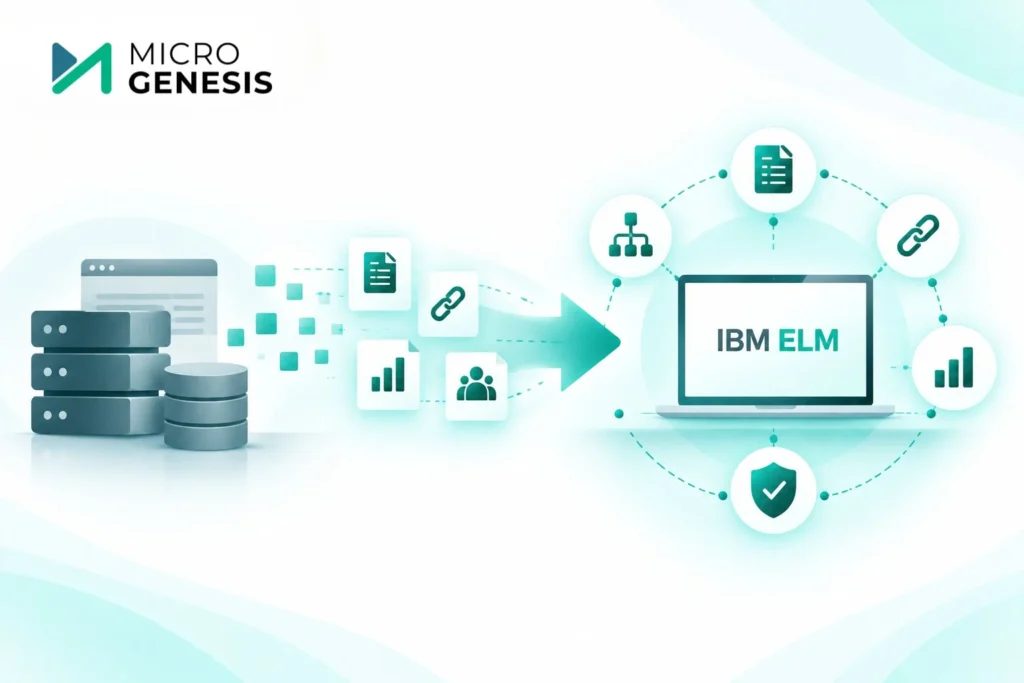
Organizations moving to IBM ELM may need to migrate requirements, attributes, relationships, historical records, and other engineering information from existing tools.
Migration involves more than transferring documents. Requirements may contain metadata, version history, links to test cases, review information, and relationships with other engineering artifacts. Losing these connections can undermine the value of the new environment.
A partner should provide a structured migration approach that includes:
- Assessment of source systems and existing data.
- Mapping of attributes, relationships, and metadata.
- Pilot migration using representative engineering information.
- Validation of migrated records and critical relationships.
- Reconciliation of discrepancies.
- Post-migration support and issue resolution.
Ask how the partner will verify that important relationships and historical information remain intact after migration.
This is particularly important for Swedish organizations managing long product lifecycles, where historical requirements and verification records may be needed for maintenance, future development, and audits.
Also clarify how the partner will handle migration risks, testing responsibilities, downtime, and recovery options before approving the implementation plan.
5. Evaluate Industry and Engineering Process Knowledge
Technical expertise alone is not enough. The partner should understand your engineering environment and the processes your organization needs to manage.
Different industries have different priorities:
- Automotive: Requirements traceability, software integration, change management, and verification.
- Industrial manufacturing: Hardware-software dependencies, configuration control, and long-term maintainability.
- Embedded systems: System interfaces, software dependencies, testing, and lifecycle management.
- MedTech: Controlled changes, documented verification, and traceable engineering evidence.
Ask for examples of relevant experience and how the partner would adapt IBM ELM to your workflows.
For automotive and embedded software organizations, improving requirements traceability across automotive and embedded software development can help connect system requirements with software implementation and verification activities.
For regulated product development, strengthening requirements traceability and verification in MedTech helps teams maintain relationships between requirements, test activities, and engineering evidence.
A suitable partner should understand that the platform needs to support the organization’s engineering processes, responsibilities, and applicable quality requirements. Avoid choosing a partner based solely on industry terminology in its marketing material; request practical examples of how it has addressed similar challenges.
6. Examine Configuration and Customization Capabilities
IBM ELM needs to support your organization’s requirements, approval processes, reporting needs, and engineering responsibilities.
Evaluate whether the partner can configure:
- Requirements structures and attributes.
- Review and approval workflows.
- User roles and access permissions.
- Traceability relationships.
- Change management processes.
- Reports and dashboards.
- Reusable templates and engineering processes.
Also ask how configuration decisions will be documented and maintained.
Excessive customization can increase maintenance costs and complicate upgrades, while insufficient configuration may leave teams dependent on manual workarounds. The partner should explain how it will balance flexibility with long-term maintainability.
For example, an organization with several engineering teams may need common requirements structures and approval rules while allowing certain workflows to vary between product lines.
A well-designed configuration should provide consistency where necessary without making the environment difficult to adapt as engineering needs change.
7. Check Security and Compliance Awareness
Engineering lifecycle platforms can contain sensitive product requirements, technical designs, test results, and intellectual property.
Your partner should understand access control, authentication, permissions, data protection, auditability, and the security requirements of your deployment environment.
For Swedish organizations working with multiple suppliers or international engineering teams, access management should allow appropriate collaboration while protecting sensitive engineering information.
Clarify how the proposed implementation will support your organization’s applicable standards and compliance processes. Discuss responsibility for permissions, administrative controls, data handling, and audit records.
For MedTech organizations, connecting requirements with verification activities in MedTech development can help teams identify coverage gaps and maintain appropriate engineering evidence.
However, IBM ELM does not automatically guarantee regulatory compliance. Compliance also depends on organizational procedures, risk management, validation, documentation, and correct use of the configured environment.
A reliable partner should clearly explain what the platform can support and which responsibilities remain with your organization.
8. Understand the Implementation Methodology
A structured implementation approach helps manage scope, risks, dependencies, and stakeholder expectations.
Ask the partner to explain how it handles the following stages:
1. Discovery: Assess existing tools, processes, and business objectives.
2. Solution design: Define architecture, workflows, integrations, and migration requirements.
3. Configuration: Configure the relevant IBM ELM capabilities.
4. Integration and migration: Connect tools and transfer required engineering information.
5. Testing and validation: Verify workflows, permissions, integrations, and migrated data.
6. Training and rollout: Prepare users and administrators for adoption.
7. Stabilization: Resolve post-deployment issues and identify improvements.
Request a project plan with deliverables, milestones, responsibilities, dependencies, and acceptance criteria.
For distributed Swedish and Nordic engineering teams, clarify communication schedules, escalation procedures, and how technical decisions will be documented.
The implementation should also define how success will be measured. Depending on the project’s objectives, measures may include improved traceability coverage, fewer manual data transfers, more consistent workflows, or better visibility into verification status.
Reducing engineering data silos across distributed R&D teams should be considered when defining integration requirements and information-sharing workflows.
9. Evaluate Training and Knowledge Transfer
Successful implementation depends on whether engineering teams can use and maintain the environment effectively.
Training should reflect the responsibilities of different user groups, including requirements engineers, developers, testers, project managers, and administrators.
Ask whether the partner provides practical training, configuration documentation, administration guidance, and troubleshooting procedures.
Knowledge transfer is particularly important if your organization wants internal teams to manage routine changes independently after implementation.
Consider measuring adoption through workflow usage, training completion, requirements traceability, and reductions in manual workarounds.
Training should also explain how requirements, development activities, and test results are connected so users understand their responsibilities for maintaining lifecycle information.
For example, requirements engineers need to understand how to maintain requirement relationships, while testers need to ensure that test cases and execution results remain associated with the relevant requirements.
The objective is to establish sustainable engineering practices rather than simply teach employees how to navigate the platform.
10. Compare Ongoing Support, Scalability, and Total Cost
IBM ELM environments evolve as organizations introduce new products, teams, workflows, and integrations. Evaluate whether your partner can support the environment beyond the initial deployment.
Consider the total cost of ownership, including:
- Consulting and implementation.
- Migration and integration.
- Configuration and customization.
- Testing and validation.
- Training and knowledge transfer.
- Ongoing support and maintenance.
- Future upgrades and workflow improvements.
Ask about support coverage, response times, escalation procedures, and which activities are included in the proposed engagement.
Also assess whether the architecture can accommodate future engineering requirements without creating unnecessary complexity.
For example, a growing Swedish R&D organization may need to connect additional development teams, expand requirements traceability, or introduce new verification workflows.
Simplifying engineering change management with IBM ELM can help organizations coordinate changes, assess dependencies, and maintain visibility across related engineering activities as their environments grow.
A suitable partner should help your organization improve its engineering environment over time, not treat deployment as the end of the engagement.
How MicroGenesis Supports IBM ELM Implementation in Sweden
MicroGenesis supports engineering organizations with IBM ELM consulting, implementation, integration, migration, configuration, and ongoing engineering lifecycle management services.
With 20+ years of experience and 400+ clients globally, MicroGenesis helps organizations address challenges involving requirements management, engineering collaboration, lifecycle traceability, and connected development workflows.
Depending on project requirements, services can include:
- IBM ELM consulting and implementation: Assess engineering processes and define an appropriate implementation strategy.
- IBM DOORS Next services: Configure requirements management, relationships, reviews, and traceability.
- IBM Rhapsody services: Support systems engineering and model-based engineering workflows.
- IBM Engineering Workflow Management services: Configure development workflows, work items, and change management.
- IBM Engineering Test Management services: Support test planning, execution, and verification traceability.
- Integration and migration: Connect relevant engineering tools and support the transition from existing environments.
- Ongoing optimization: Improve configurations, workflows, integrations, and lifecycle visibility.
The proposed scope should be tailored to your current toolchain, engineering processes, and business objectives.
Frequently Asked Questions
What does an IBM ELM implementation partner do?
An IBM ELM partner helps organizations assess their engineering processes, configure the platform, integrate tools, migrate data, establish traceability, train users, and support the environment after deployment.
How do I choose an IBM DOORS Next partner in Sweden?
Evaluate hands-on DOORS Next experience, requirements management expertise, integration and migration capabilities, relevant industry experience, and the partner’s approach to ongoing support.
How long does IBM ELM implementation take?
The timeline depends on the number of tools and teams involved, workflow complexity, migration requirements, integrations, and validation scope. A partner should provide a realistic estimate after assessing your environment.
Can IBM ELM improve requirements traceability?
Yes. When configured and maintained appropriately, IBM ELM can help connect requirements with design, development, and testing artifacts, improving visibility into coverage and change impact.
Does IBM ELM automatically ensure compliance?
No. IBM ELM can support traceability, controlled workflows, and engineering evidence, but compliance also depends on organizational procedures, validation activities, and applicable requirements.
Conclusion
Choosing an IBM ELM partner in Sweden requires evaluating more than product knowledge and implementation pricing. Requirements traceability, integration, migration, industry experience, project governance, training, and long-term support all influence implementation success.
By assessing these ten factors, Swedish engineering organizations can select a partner aligned with their current engineering challenges and future development needs.
MicroGenesis provides IBM ELM consulting and implementation support, including DOORS Next, Rhapsody, Engineering Workflow Management, and Engineering Test Management services, helping organizations build more connected and maintainable engineering workflows.